Jazz
The Remarkable Legacy of Andreas Paragioudakis
LP Review
In a historical context, the concept of heritage is often misused for reactionary purposes. Opportunists instrumentalize and distort history to construct nonexistent value frameworks of the past. By idealizing history, we accelerate nationalism, and heritage thus becomes an empty phrase of pride and a myth of exclusive identity. On the other hand, it is also heritage that is systematically misused to stigmatize opponents by excluding them from this framework of identification. An example of the disgraceful desecration of the concept of heritage in Slovakia is the annual theatrical adaptation of the message of the historical figures Cyril and Methodius. The radically intellectual and deeply spiritual legacy of these fundamentally progressive, cosmopolitan, cultured, and socially competent thinkers and diplomats is criminally reduced to nonsensical, offensive, contemptible, and divisive political agitation.
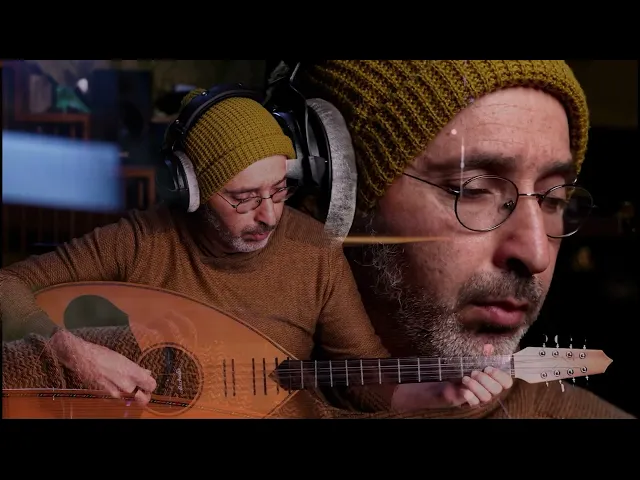
Why such an activist-style introduction to a review of the album “Heritage” (No AI Music 2026)? For two reasons. First: this album offers an unusually complex musical analysis of archaic compositional and sonic traditions. And second: the cultural origins of these highly intriguing jazz excursions into the auditory spectra of the past are also of Greek provenance. Educator, composer, instrumentalist, and cultural event organizer Andreas Paragioudakis hails from sunny, legend-shrouded Crete. From childhood, he was captivated by the sound of the ancient lyre. This instrument of the ancient world—which comes to mind when we picture musicians depicted on Greek vases—has indeed undergone a transformation in form, but when you hear its sound, you sense that it is firmly anchored outside our space and time.
Ethnomusicology is also often co-opted into politicized roles through the manipulation of nostalgia. This is why totalitarian regimes, too, seek to appropriate folklore so they can use it to convey emotionally charged but simplistic messages at a superficial level. I certainly wouldn’t dare accuse my beloved genre of collaboration, but it must be said that the market is flooded with far too many cheap quasi-jazz paraphrases of pseudo-folk or exotic-sounding themes. Faced with the umpteenth variation on folk themes in jazz, I therefore openly advocate for an embargo that I would impose on this type of work.
However, this prohibition against drowning both genres in the hackneyed pathos of repetitive musical gestures does not apply to the kind of work that Andreas Paragioudakis presents to us. His interpretation of the musical heritage is neither a trivial, trendy, nor opportunistic attempt to appeal to a specifically sensitive audience. In his case, it involves a sophisticated defragmentation of ancient musical matrices and their transposition into the language of timeless, experimental jazz. It is remarkable how, from the dramatic movements and monumental refrains composed for string quartet, a mournful echo of bygone times emerges in the sound of the lyre. The album “Heritage” is a compositional delight, a masterclass in modern arranging and the creation of exotic hues on a canvas woven from the materials of Western musical traditions.
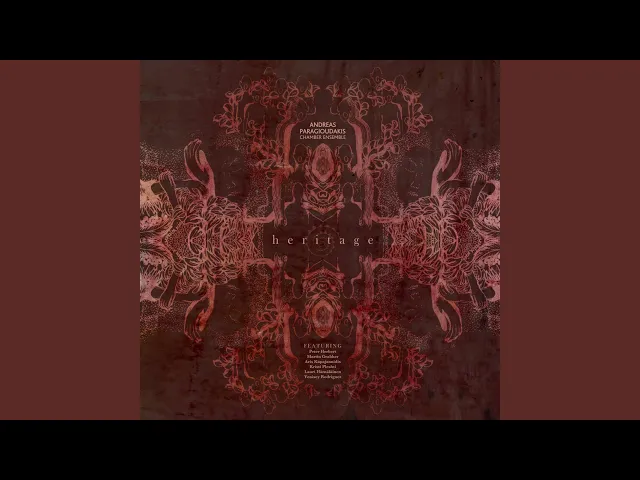
The Mediterranean Orient is not meant to be merely an exotic aroma in an otherwise bohemian café, but a truly valuable heritage worthy of reflection and careful interpretation. Andreas Paragioudakis succeeds in this with a great deal of charm. In none of the eight tracks on the beautifully marbled special vinyl edition of the album Heritage does this talented composer and player of the lyre, mandolin, and piano resort to cheap tricks or popular formulas. He even puts the string sections in an uncomfortable position. He excels at striking a delicate balance between the melodic function of sustained chords and the disharmonic destabilization within a fragile polyphony. Here, heritage is not a tool for manipulating the masses, and Greece is not merely the source of Hollywood clichés about heroes from myths and sagas. It is a vibrant and rich culture that, thanks to such successful productions, we can discover again and again.
Andreas Paragioudakis: Composition, Piano, Lute, Mandolin
Peter Herbert: Double Bass
Martin Grabher: Drums
Aris Kapajannidis: Violin
Kristi Pleshti: Violin
Lauri Hämäläinen: Viola
Yenisey Rodriguez: Violoncello