Exhibitions
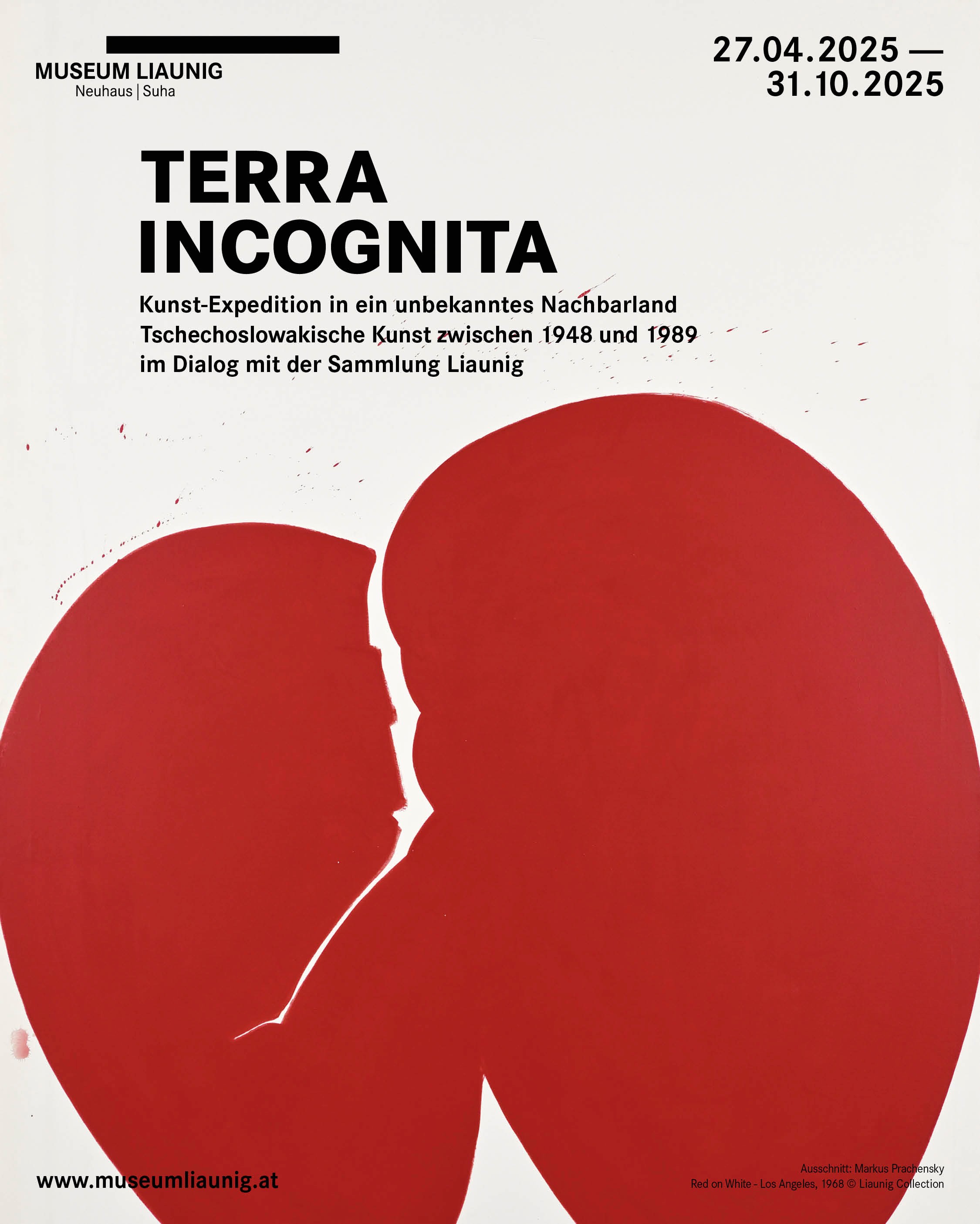
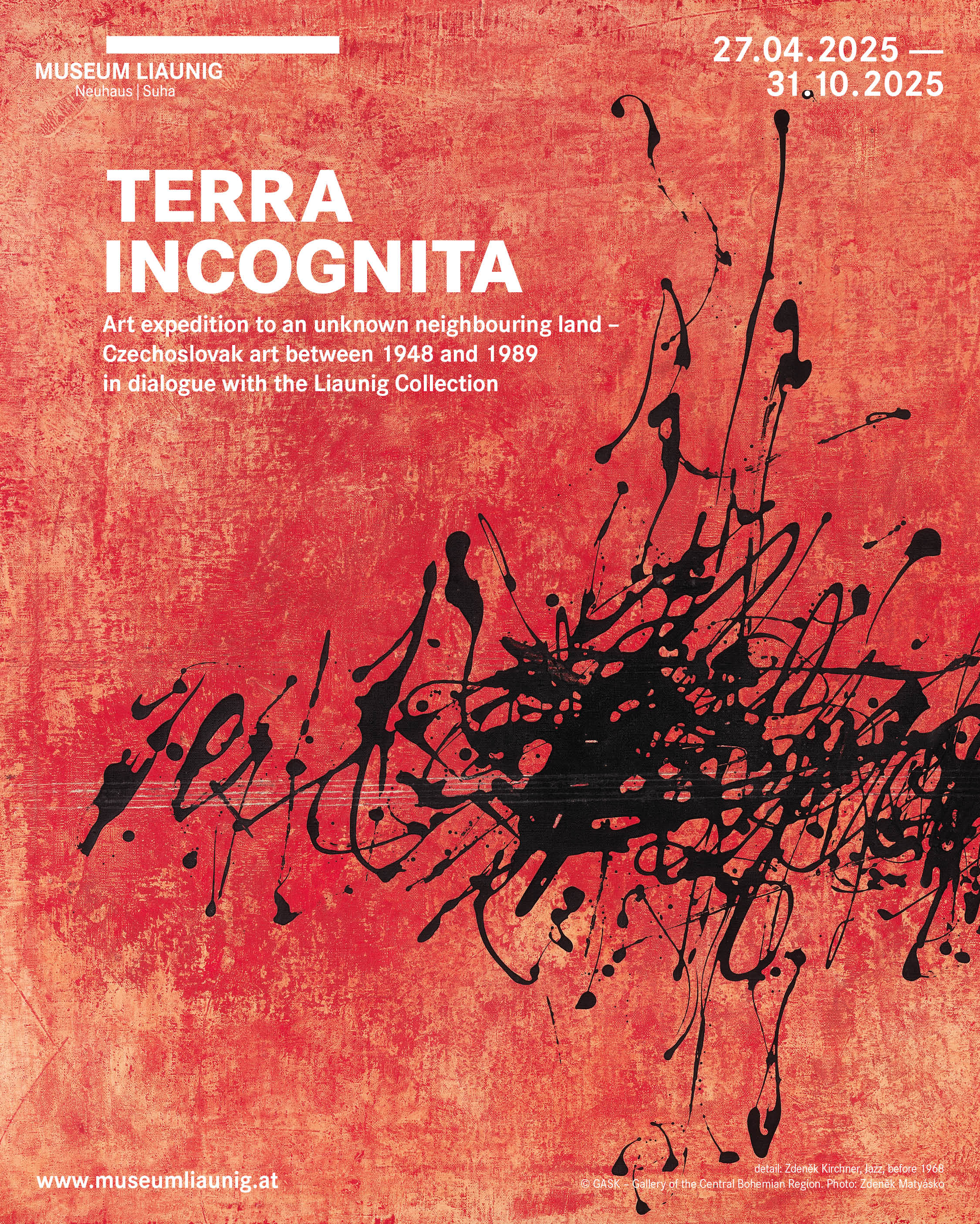
TERRA INCOGNITA
Kunstexpedition in ein unbekanntes Nachbarland Tschechoslowakische Kunst zwischen 1948 und 1989 im Dialog mit der Sammlung Liaunig
Art expedition to unfamiliar neighbour.
Czechoslovak art between 1948 and 1989 in dialog with the Liaunig Collection
Museum Liaunig, Neuhaus/ Suha, 27.04.2025 – 31.10.2025
Hardly any other term circulates in the art of the first decades of the 21st century as much as that of the "postcolonial". In the contemporary art world, it stands for the need to look beyond the emancipated art centers to production in countries that have long and sacrificially fought for their independence. However, the term tempts us to see the problem from the perspective of the fatal colonial policies of the 19th century in non-European regions. However, the problem is much more complex and complicated. On the art market, which always functions according to trends, productions are repeatedly overlooked or even deliberately ignored simply because they do not conform to one canon or another. As a result, there will always be blind spots on the art map that are perceived as uninteresting. The mutual perception of the three neighboring countries Austria - Czech Republic - Slovakia is a pars pro toto example of what such a dynamic in cultural exchange can look like on the basis of a geopolitical division. Three decades after the fall of the Iron Curtain and after ever new research and institutional projects to explore and contextualize the Central European art region, mutual awareness of the respective positioning of art in the course of the 20th century remains very limited.
It is therefore still important to leave one's own comfort zone and venture into unfamiliar territory, because only then will a much broader picture of parallel developments, global phenomena, but also differences, aesthetic peculiarities and other artistic phenomena in the culture of the turbulent post-war period in Central Europe become visible.
https://www.museumliaunig.at/en/shop/exhibitioncatalogues.html
The exhibition is limited to the years 1948 to 1989, because these years represent the phase of the division of Europe, in which Austria and Czechoslovakia found themselves in two different spheres of influence and the mutual exchange in the previously so organically grown socio-cultural neighborhood was radically interrupted.
Since the parameters of art development in the two countries were shaped according to very different criteria and the artists had to work with sometimes completely different socio-political challenges, but were always located in a historically compact geographical sphere, the exhibition is divided into so-called "territories" that correspond to the variability and individual specifics of art production in these decades. Based on the tendencies towards figuration, abstraction, geometrization and pluralization typical of postmodernism, the respective artists from Austria and Czechoslovakia meet in a staged dialogue in which the concrete phenomena that developed partly continuously, partly in parallel and partly differently during the four decades of the Cold War are illuminated.
The exhibition area is approximately 2,400 square meters. Around 220 works of art are on display, mainly paintings and sculptures.
List of artists:
Milan Adamčiak, Marc Adrian, Jiří Balcar, Juraj Bartusz, Mária Bartuszová, Josef Bauer, Štefan Belohradský, Jiří Bielecki, Hans Bischoffshausen, Vladimír Boudník, Hellmut Bruch, Miloslav Chlupáč, Miloslav Cicvárek, Jarmila Čihánková, Miroslav Cipár, Jiří David, Hugo Demartini, Milan Dobeš, Jiří Georg Dokoupil, Otto Eder, Libor Fára, Rudolf Fila, Stano Filko, Emil Filla, Herbert Flois, František Foltýn, Johann Fruhmann, Michal Gabriel, Roland Goeschl, Franz Grabmayr, Mira Haberernová-Trančíková, Josef Hampl, Jiří Hilmar, Rudolf Hoflehner, Wolfgang Hollegha, František Hudeček, Friedensreich Hundertwasser (Friedrich Stowasser), Josef Istler, Othmar Jaindl, Jozef Jankovič, Čestmír Janošek, Jiří John, H+H Joos (Harold Joos, Hildegard Joos), Martha Jungwirth, Zdeněk Kirchner, Alojz Klimo, Tamara Klimová, Alfred Klinkan, Eva Kmentová, Milan Knížák, Jan Koblasa, Peter Kogler, Jiří Kolář, Stanislav Kolíbal, Július Koller, Jan Kotík, Jiří Kovanda, Viera Krajcová, Radoslav Kratina, Matej Krén, Richard Kriesche, Rudolf Krivoš, Jan Kubíček, Jaroslava Kurandová, Bohdan Lacina, Aleš Lamr, Maria Lassnig, Mariane Maderna, Gottfried Mairwöger, Antonín Málek, Karel Malich, Pavel Maňka, Mikuláš Medek, Juraj Meliš, Jürgen Messensee, Anastázia Miertušová, Josef Mikl, Vladislav Mirvald, Alexander Mlynárčik, Gerhardt Moswitzer, Jiří Načeradský, Rudolf Němec, Karel Nepraš, Pavel Nešleha, Hermann Nitsch, Franz Xaver Ölzant, Peter Oriešek, Marek Ormandík, Hermann J. Painitz, Milan Paštéka, Helga Philipp, Robert Piesen, Josef Pillhofer, Peter Pongratz, Markus Prachensky, Drago j. Prelog, Hannes Priesch, Arnulf Rainer, Erwin Reiter, Franz Ringel, Michael Rittstein, Gerwald Rockenschaub, Hubert Schmalix, Christian Schwarzwald, Zbyněk Sekal, Miloš Ševčík, Agneša Sigetová, Rudolf Sikora, Natálie Šimanová, Adriena Šimotová, Paulína Skavová, Otakar Slavík, Miroslav Šnajdr st., Soshana (Susanne Schüller), Jiří Sozanský, Jakub Špaňhel, Hans Staudacher, František Štorek, Jan Švankmajer, Ján Švec, Zdeněk Sýkora, Laco Teren, Erwin Thorn, Margita Titlová-Ylovsky, Jorrit Tornquist, Miloš Urbásek, Andreas Urteil, Jiří Valenta, Jitka Válová, Aleš Veselý, Jaroslav Vožniak, Max Weiler, Hana Wichterlová, Jan Wojnar, Erwin Wurm, Jana Želibská, Kamila Ženatá und Olbram Zoubek.
https://www.parnass.at/termine/terra-incognita-museum-liaunig
https://www.les-nouveaux-riches.com/interview-with-miroslav-halak/
https://www.ta3.com/relacia/995601/spajaju-nas-spolocne-hranice-aj-historia-napriek-tomu-vieme-o-nasich-susedoch-pomerne-malo
https://modernartbrno.com/blog/kazdy-je-soucasti-nejakeho-spolecenstvi-rozhovor-s-inge-koskovou-2/
https://www.pravda.sk/spravy/kultura/clanok/750152-rakusania-vedia-malo-o-umeni-susedov-na-vystave-v-korutansku-najdete-aj-slovensko
https://www.artdispecing.sk/jazdec/
https://wien.czechcentres.gov.cz/de/blog/2025/05/liaunig-2025
https://karlpoelz.com/terra-incognita-im-museum-liaunig/
https://www.kleinezeitung.at/artikel/19620040/blick-hinter-den-eisernen-vorhang


